Gym hygiene is one of the first things members judge a facility on. Ask most gym owners what their cleaning contract covers and you’ll get an answer built around floors and bathrooms — the same scope you’d write for an office. The problem is that a gym generates a hygiene load an office simply doesn’t: shared equipment touched by dozens of sweating hands an hour, rubber flooring that traps odour differently to carpet or tile, and change rooms used at a intensity level most commercial cleaning schedules were never designed around.
Members notice the gap even when they can’t articulate it. It shows up as “this place feels a bit grimy” rather than a specific complaint — which makes it hard to fix reactively, because there’s no single incident to respond to.
Gym hygiene: where standard schedules fall short
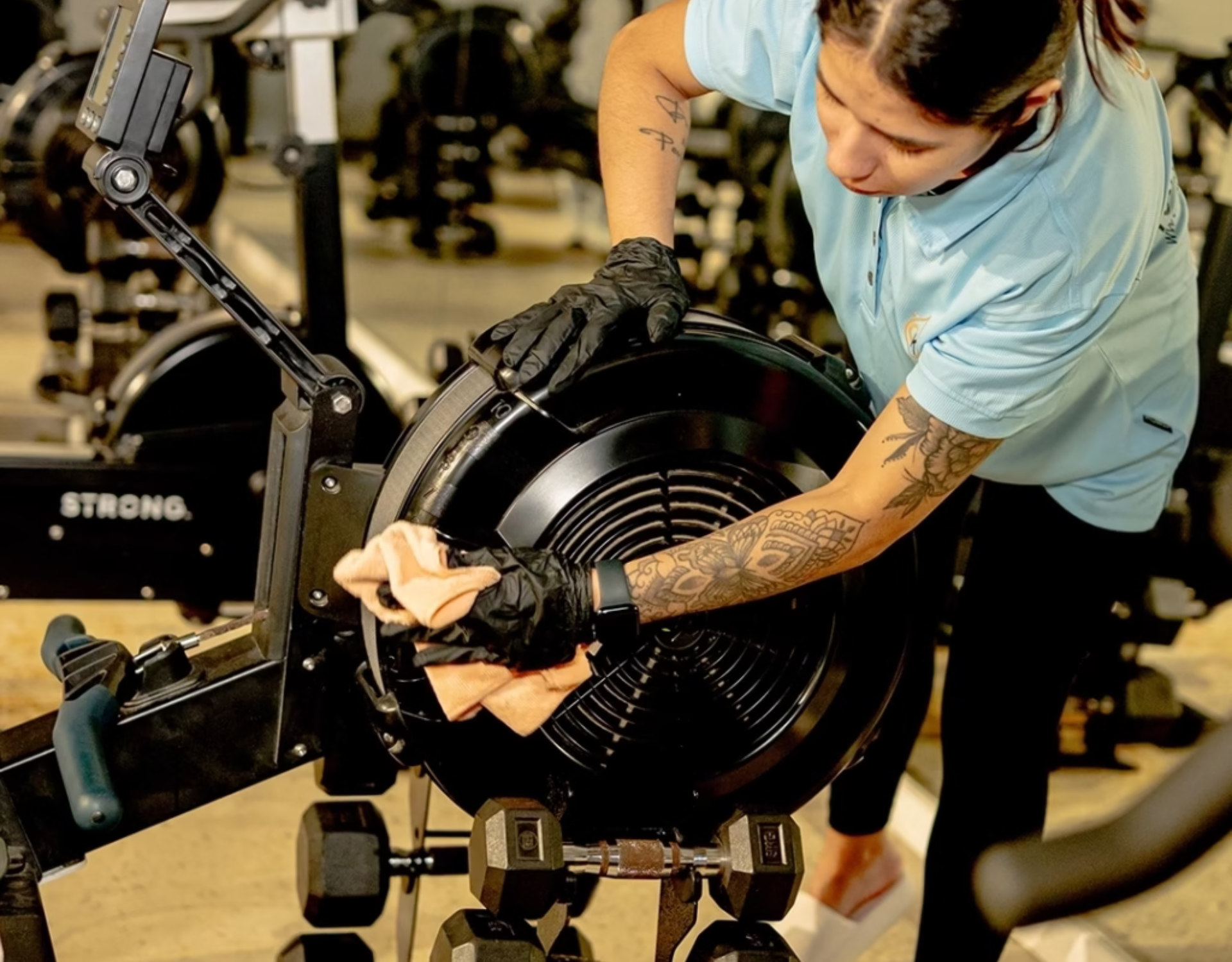
Equipment surfaces get missed between sessions
Wiping down machines once a day, after close, misses the accumulation that happens across a full day of back-to-back use. High-traffic equipment — benches, cardio machines, free-weight racks — needs a servicing rhythm that reflects actual usage, not a fixed once-daily pass.
Rubber flooring needs different care than standard flooring
Rubber gym flooring absorbs odour and sweat differently to tile or carpet, and generic mopping products can actually degrade the surface over time. It needs cleaning products and techniques suited specifically to the material.
Change rooms are treated like standard bathrooms
Locker rooms and showers see far more moisture, humidity and direct skin contact than a typical office bathroom, which changes both the mould/mildew risk and the required servicing frequency.
Mirrors and glass get deprioritised
In a space built around visual feedback — members checking form in the mirror — smudged glass undercuts the professional feel of the whole facility, disproportionately to how minor the issue seems on a checklist.
Members can’t diagnose a cleaning schedule that’s wrong for the space. They just decide, gradually, that the place doesn’t feel as well-kept as it should.
What a gym-appropriate cleaning scope includes
- Equipment surface sanitisation scheduled around actual peak usage, not just close of business
- Rubber and specialty flooring care using appropriate, non-degrading products
- Change room, shower and locker servicing at a frequency matched to humidity and usage
- Mirror, glass and high-touch point detailing as a distinct checklist item
- Flexible scheduling around early-morning or late-night operating hours
Questions to ask a provider
- Do you use different products for rubber flooring than for standard commercial flooring?
- How often are high-traffic equipment surfaces serviced during operating hours, not just after close?
- Can you work around 5am or midnight access windows?
A provider with real fitness-facility experience will have specific, confident answers to all three — because the operational differences aren’t subtle once you’ve actually run a gym cleaning contract.
How Gold Keys scopes gym contracts
Gold Keys builds gym cleaning schedules around actual member traffic patterns rather than a fixed daily template, with product selection matched to rubber and specialty flooring. Every visit is still documented the same way as any other site — but for gyms, that documentation often matters most around change room and equipment servicing, where members are least likely to see the work directly but most likely to notice if it’s missing.