A useful commercial cleaning checklist does more than list tasks. It tells the cleaning team what must be done, where it must be done, how often it must happen and who checks the result. For Gold Coast facility managers, office managers and strata committees, that clarity is what turns a cleaning quote into a service that can actually be measured.
This guide provides a practical starting point for offices and shared commercial facilities. Adapt it to the size of your building, operating hours, foot traffic, surfaces and industry risks. If you are reviewing a current contractor, use it to identify gaps before the next site meeting.
Commercial cleaning checklist: the quick answer
Your scope should separate tasks into every visit, weekly, monthly and periodic frequencies. It should also identify high-priority areas, approved products, access requirements, consumables, reporting and supervisor checks. A generic list copied from another building will rarely reflect how your own site is used.
| Frequency | Main purpose | Typical examples |
|---|---|---|
| Every visit | Hygiene, presentation and immediate risks | Amenities, bins, kitchens, touchpoints, visible floor soil |
| Weekly | Control gradual build-up | Full floor edges, internal glass, desks where cleared, fixtures |
| Monthly | Reach less visible areas | High dusting, vents, detailed skirtings, furniture bases |
| Periodic | Protect assets and restore presentation | Carpet extraction, machine scrubbing, external glass, pressure cleaning |
1. Reception and entrance checklist
The entrance sets the standard for the rest of the building. It also collects more sand, moisture and outdoor soil than most internal areas, especially during wet weather or busy visitor periods on the Gold Coast.
- Vacuum or mop the entrance floor and remove visible debris.
- Spot-clean entry glass, doors and partitions.
- Wipe reception counters without disturbing documents or equipment.
- Clean door handles, push plates and other frequently touched points.
- Empty bins and replace liners where required.
- Check mats for movement, curled edges, moisture and excessive soil.
- Report damaged flooring, lighting or trip hazards.
2. Workstations, meeting rooms and shared spaces
A scope must state what cleaners may move. At Gold Keys, the safest default is to clean clear surfaces and work around papers, personal items and active equipment unless the client has approved another process.
- Empty general waste and recycling according to the site process.
- Vacuum traffic lanes every visit and complete the full carpet area on the agreed rotation.
- Mop hard floors using the product and method suited to the surface.
- Wipe clear desks, meeting tables and shared counters.
- Clean switches, handles, shared phones and meeting room controls.
- Spot-clean marks on doors, walls and partitions.
- Return chairs neatly and leave rooms ready for use.
For a more detailed office-specific scope, see our Gold Coast office cleaning service.
3. Kitchen and break-room checklist
- Clean benches, sinks, taps and splashbacks.
- Wipe the exterior of microwaves, fridges, dishwashers and small appliances.
- Remove food waste and replace bin liners.
- Clean tables and chair contact points.
- Mop the floor, paying attention to edges and beneath accessible furniture.
- Refill nominated consumables and report low stock.
- Record spills, leaks, pest evidence or damaged fixtures.
The contract should clearly say whether dishes, fridge interiors, coffee machines and expired food are included. These are common sources of disagreement because they are often assumed rather than written into the scope.
4. Toilets, showers and amenities
- Clean and disinfect toilets, urinals, basins, taps and surrounding contact surfaces.
- Clean mirrors and polish suitable metal fixtures.
- Refill soap, toilet tissue and paper products included in the agreement.
- Empty sanitary and general waste using the correct process.
- Mop floors and leave them safe for access.
- Remove visible marks from partitions, doors and walls.
- Check odour, drainage, leaks and dispensers and report faults promptly.
Queensland’s workplace guidance says cleaning systems should be planned rather than reactive and should include suitable schedules, methods, equipment, trained personnel and communication. It also highlights the need to manage spills, residues and wet-floor access. See WorkSafe Queensland’s cleaning guidance.
5. Floors: write the method, not only the task
“Clean floors” is too vague for an accountable scope. Different surfaces need different equipment, products and frequencies. Record whether the area needs vacuuming, damp mopping, machine scrubbing, burnishing, spot treatment or periodic extraction.
- Identify carpet, vinyl, tile, polished concrete, timber and specialty flooring separately.
- Increase attention at entrances, kitchens, lifts and other high-traffic points.
- Include edges, corners and beneath movable furniture on a rotation.
- Specify how wet areas are isolated until safe.
- Schedule periodic commercial carpet cleaning before visible wear becomes permanent.
6. Weekly and monthly detail tasks
Not every task belongs in every visit. Spreading detail work across a written rotation keeps the core clean realistic while preventing hidden build-up.
Weekly rotation
- Full floor edges and corners.
- Internal glass and partitions.
- Detailed kitchen appliance exteriors.
- Accessible ledges, frames and low-level surfaces.
- Meeting chairs and upholstered furniture vacuuming.
- Bin cleaning where required.
Monthly rotation
- High dusting within safe access limits.
- Vents, grilles and tops of cupboards.
- Detailed skirtings, door frames and furniture bases.
- Low-use rooms and storage areas.
- Review of marks, staining and maintenance issues.
- Supervisor inspection against the agreed scope.
7. Adjust the checklist to your facility
An office, childcare centre, gym and strata property should not share the same generic checklist. Each environment adds different risks and priorities:
- Childcare: play areas, washrooms, nappy-change zones and approved site procedures. Review our childcare cleaning service.
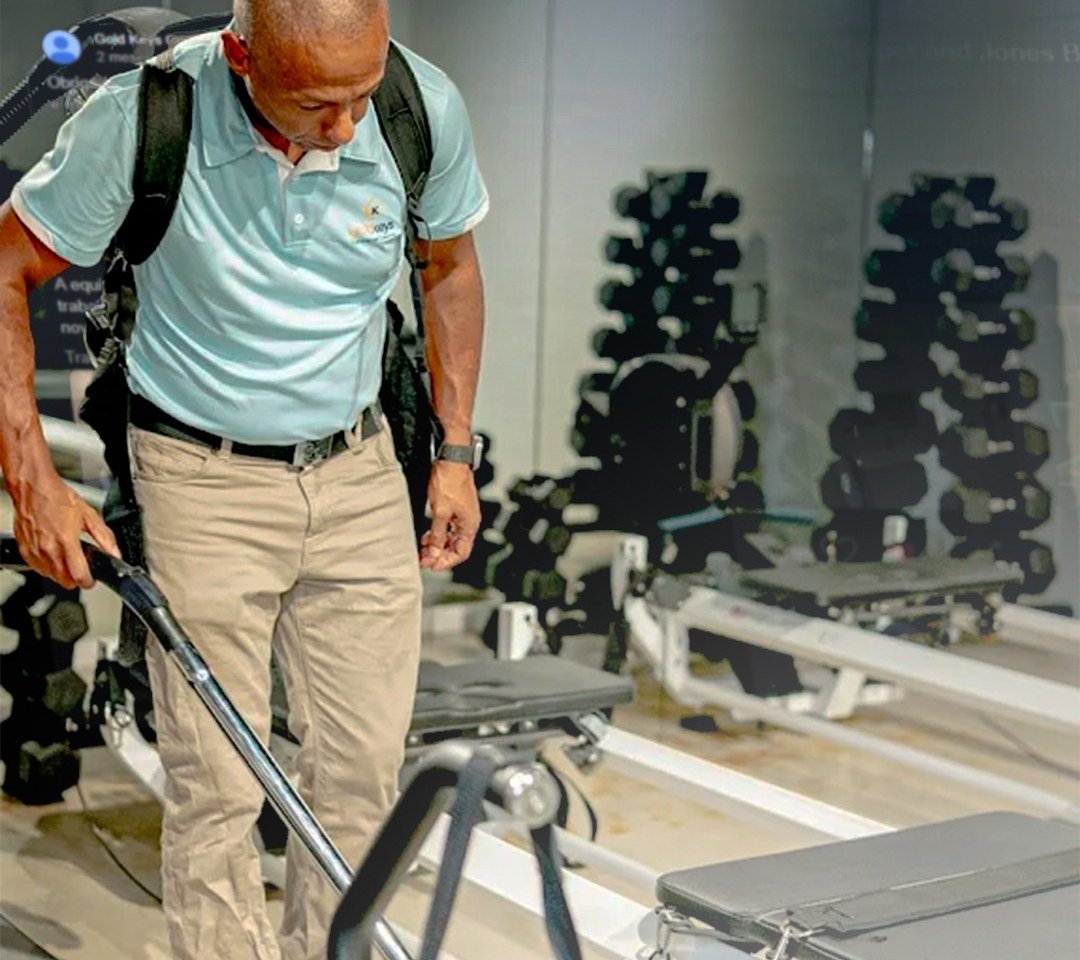
- Gyms: equipment touchpoints, change rooms, showers and high-use floor areas. See gym cleaning on the Gold Coast.
- Strata: entrances, lifts, stairs, bin rooms and shared external areas. See our strata cleaning service.
- Busy offices: kitchens, meeting rooms and amenities may need different frequencies from low-use work zones.
8. Add accountability to the checklist
A checklist alone does not prove quality. Assign responsibility and make the result easy to verify. Your cleaning plan should identify the cleaner or team, the supervisor, how missed tasks are reported, the response time and the record used for recurring or periodic work.
After working from cleaner to supervisor and business owner on the Gold Coast, I have found that the most useful scopes are specific enough to inspect but simple enough for the cleaner to follow during every visit. If a line cannot be checked objectively, rewrite it. “Clean kitchen” is subjective; “clean benches, sink, taps, appliance exteriors, bins and floor every visit” is measurable.
When comparing providers, pair this checklist with our guide to comparing commercial cleaning quotes on the Gold Coast.
Questions facility managers ask
How often should a commercial office be cleaned?
The right frequency depends on occupancy, operating hours, visitor numbers, amenities and presentation standards. High-use kitchens, toilets and entrances may need attention every business day, while low-use offices may use a lower overall frequency with clearly scheduled detail work.
Should consumables be included?
They can be, but the agreement should name each item and state who orders, stores and refills it. Soap, toilet tissue, paper towel and bin liners are common inclusions, while pricing arrangements vary.
Who should check the cleaner’s work?
The cleaning company should have its own supervision and quality checks. The client should also have a clear contact and a simple way to report exceptions. Regular joint reviews are useful for buildings whose use changes over time.
Can one checklist be used for every site?
Use a master template as a starting point, then adapt it after a physical site assessment. Layout, flooring, access, industry requirements and occupancy can change both the task and the frequency.
Turn the checklist into a site-specific cleaning scope
Gold Keys Commercial Cleaning & Facility Services builds scopes around the way each Gold Coast site is actually used. We walk the building, agree on priorities and frequencies, then give the operations team a plan that can be supervised and measured.